
Key Factors Affecting the PCB Manufacturing Cost
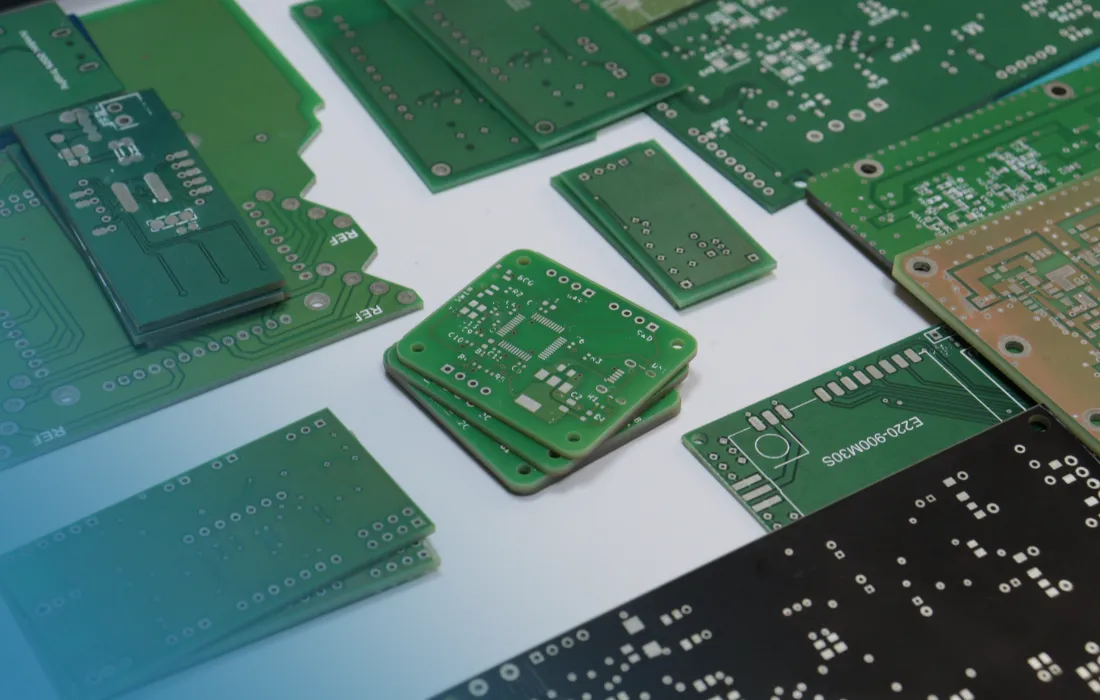
The price of PCB manufacturing depends on many factors: design complexity, type of raw material, dimensions, panelization, order quantity, board outline shape, and more. Many of these are decided long before you place an order – which means understanding them early gives you real control over the final cost. When preparing a Gerber file to place a PCB order, we recommend paying attention to the following factors. The most important ones affecting pricing are:
PCB Design
Certain design parameters – trace width, the spacing between traces, the ratio and size of hole and pad diameters (when smaller than 0.2 mm) – increase the manufacturing cost. The tighter these tolerances, the more precise (and expensive) the equipment and process control required, and the higher the chance of yield loss. If your application allows it, keeping traces and spacing within standard tolerances is one of the easiest ways to bring the quote down.
Number of Layers
The number of layers directly affects PCB manufacturing pricing, since more layers require more raw material and involve more complex production processes. Each added layer means extra lamination, drilling, and inspection steps, so cost rises in noticeable steps – not gradually – as you move from 2 to 4 to 6 layers. It’s worth confirming early whether your circuit truly needs the layer count specified.
Panelization
For small-quantity PCB orders (up to 10 pieces), a minimum panel size of 180×280 mm is used. The minimum price stays the same regardless of how many boards fit on that panel. This means smaller boards can share a single panel at no extra cost, so the per-unit price drops sharply the more of them you fit – a key lever for keeping prototype and low-volume runs economical.
Raw Material
The cost of a PCB also depends significantly on which raw material you choose and what thickness you want it made in. Standard FR-4 is the most economical, while specialty laminates (high-frequency or high-temperature materials) carry a premium. Specifying a material grade beyond what your design actually requires is a common and avoidable source of added cost.
Surface Finish
Depending on the type of finish – tin (HASL), rose alloy, organic (OSP), or gold-plated (ENIG) – the price varies. HASL and OSP are the most budget-friendly options, while ENIG costs more but offers better flatness and shelf life for fine-pitch or long-stored boards. Choosing the finish that matches your assembly needs, rather than defaulting to the most premium one, keeps costs in check.
Hole Size and Density
The PCB cost varies depending on small hole sizes (0.25 mm and below) and the board thickness-to-hole-diameter ratio (5:1 aspect ratio). The price may also rise if hole density exceeds 500 per 1 dm². Very small or very deep holes wear drill bits faster and slow production, while high hole counts add drilling time directly – both of which feed into the final quote.
Other Manufacturing Requirements
Special, non-standard requirements are discussed separately. For details, call the number listed on the website, write to our email address, or reach out on our Telegram channel. Examples include controlled impedance, unusual board outlines, tight delivery timelines, or special testing – any of which can affect both price and lead time, so it’s best to flag them up front.
Summary
Getting the design right from the start is the biggest lever for controlling PCB manufacturing costs – most of the factors above are locked in at the design stage. Optimizing them deliberately not only lowers your upfront price but also prevents the far larger costs of failed boards and redesigns down the line. If you’d rather not navigate these trade-offs alone, our PCB design services can help you build a manufacturing-ready, cost-optimized design from the outset. When in doubt, share your Gerber files with us early so we can flag cost drivers before production.